Demo walkthrough
The demo service in examples/demo includes processes for user tasks, decisions, gateways, subprocesses, timers, messages, multi-instance and AI requests. Try them on the live demo or run them locally using the quick start.
TestUserTask#
A manager from managers approves a request. Start with {"initiator":"alice"}. Claim the approval as bob in group managers, then complete with {"approved":true} to finish. With false, the process creates a correction task for alice; completing it returns to approval.
curl -XPOST localhost:8080/api/v1/processes/TestUserTask/instances \
  -d '{"variables":{"initiator":"alice"},"businessKey":"request-1"}'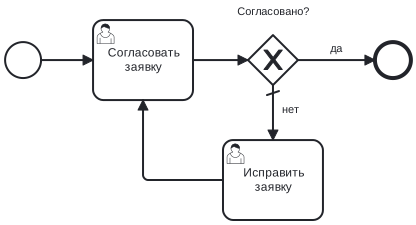
TestDecision#
Two business rule tasks call Decision_1 in sequence. Inputs a=foo, b=bar produce c="correct foobar". Other combinations exercise different rows. Decision functions compile into Go; the console shows matched rules.

TestBpmProcess#
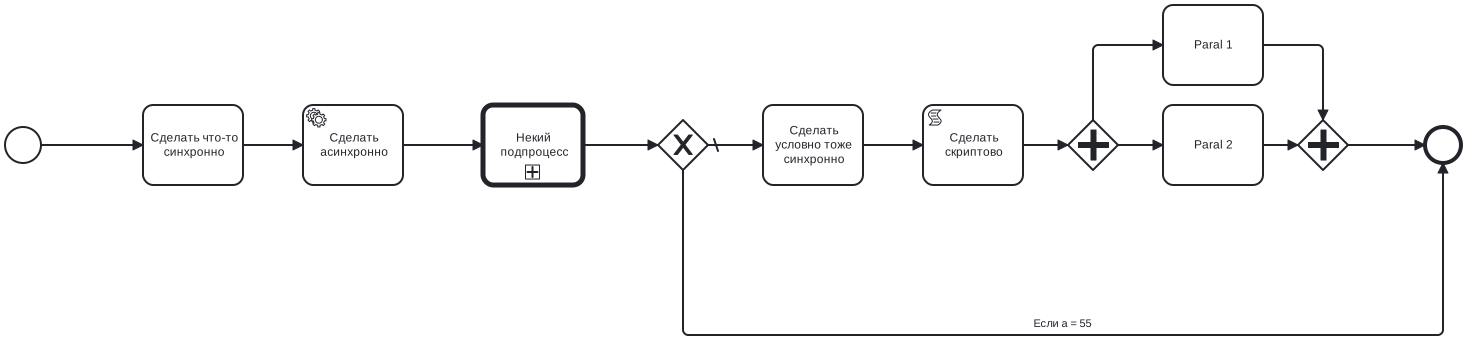
A synchronous method, service task and call activity lead to an exclusive gateway on amount. With 55, the process follows one branch. With 1, it takes the script and parallel branches. Use a string such as "abc" to exercise type failure and recovery: after system retries are exhausted, fix token variables and retry in instance history.
The default system retry budget is 10 attempts with increasing delay, so failure takes several minutes rather than appearing immediately.
testSubProcess#
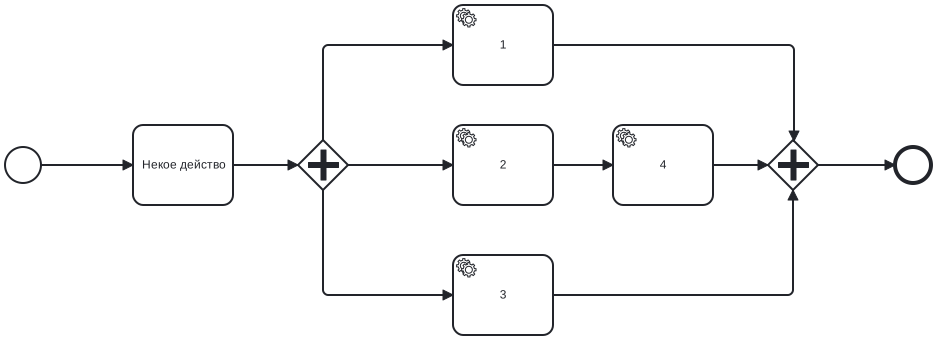
Three service task branches run through separate queue tasks and join before completion. This demonstrates concurrent handlers rather than synchronous methods within a single step. It can be started directly or invoked by TestBpmProcess.
TestTimerAndException#
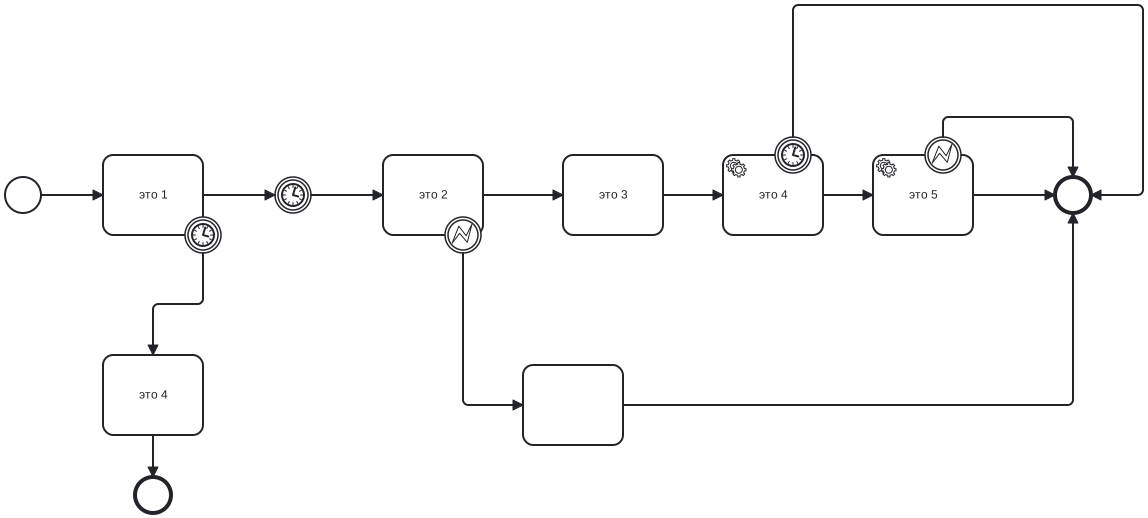
An intermediate timer waits three seconds. Boundary timers and errors provide alternate paths. Demo methods normally act as stubs and follow the main path; to exercise errors or timeouts locally, make the relevant method return a matching bpm.NewError or wait while observing context cancellation. The BPMN guide explains routing and retry behavior.
TestMultiInstance#
A notification method runs three times. A sequential review task repeats until approved is true, up to three rounds. loopCounter exposes the current round. The live demo offers approval and another-round actions as bob from managers.

TestMessage#
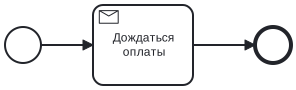
A receive task waits for paymentReceived, correlated by the instance business key. Start with a non-empty business key, then send:
curl -XPOST localhost:8080/api/v1/messages \
  -d '{"name":"paymentReceived","correlationKey":"order-1","variables":{"paid":true}}'
The message advances matching waiting tokens and merges its variables. An optional ttl can buffer a message that arrives before the token starts waiting.
TestAiTask#
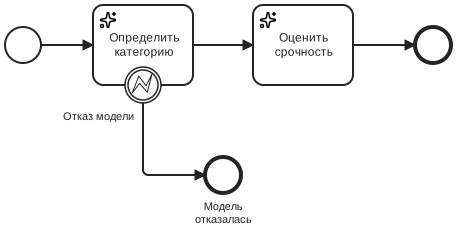
Two AI tasks classify a request and assess urgency. The first writes text into category; the second writes JSON into triage. A refusal follows the ai_refusal boundary error. The demo uses aistub; your service supplies an implementation of engine.AIClient.
Follow an instance#
Open instance history to see the token path, task variables, child instances and DMN rule results. Root instances can be cancelled. Failed tasks can be retried with previous or corrected variables. These actions are also available through the HTTP API.